- Property Tax Management

RPIE Filing Services in NYC
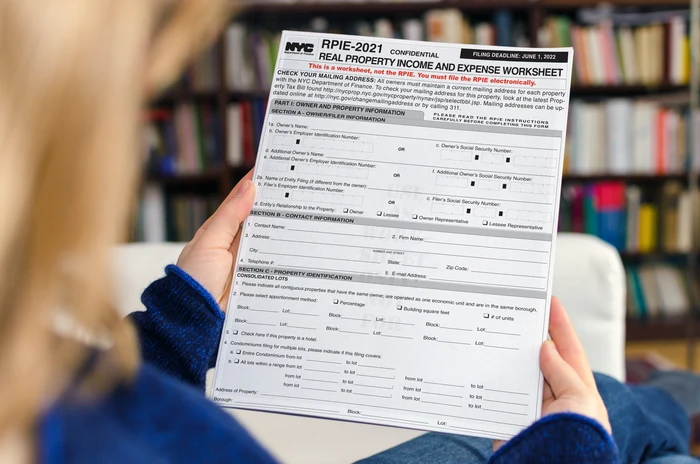
MGNY Consulting helps NYC property owners and management companies prepare and submit annual RPIE filings, including late-filing situations. The work starts with the property’s reporting obligation and the income and expense records for the correct year.
Discuss an RPIE filing or call (212) 343-1111 with the property address and reporting year.
Who must file an RPIE in NYC?
Owners of most income-producing properties with an actual assessed value above $40,000 on the tentative assessment roll must file a Real Property Income and Expense (RPIE) statement or, where required, a claim of exclusion. The filing obligation depends on the property and its use. Some properties do not need either filing, so an assessed value above the threshold does not by itself settle the question.
DOF’s RPIE filing information distinguishes income reporting, claims of exclusion and properties with no filing obligation. Check the rules for your building, including any ownership or use changes during the reporting year.
When is the RPIE deadline?
The RPIE-2025 deadline was June 1, 2026 and has passed. Check DOF’s current instructions for the next cycle. If you have a non-compliance notice, also check the response date stated on it.
If you missed a filing, the reporting year and any non-compliance notice determine the next step. NYC311 states that the public filing system accepts the current RPIE reporting year, not earlier years. A notice may require you to submit or amend a filing by the date stated on it. MGNY can review the notice and help with the available filing route; submitting late does not guarantee that a penalty will be removed.
Penalties for not filing, and how MGNY contests them
A required filing that is missing or late can lead to a monetary penalty and loss of a Tax Commission hearing on the following year’s assessment. DOF may also value a non-filer’s property using information from comparable properties instead of the owner’s actual income and expenses.
DOF’s published non-filing schedule ranges from $300 to $100,000, based on final assessed value. Three consecutive missed income and expense statements may lead to a penalty of five percent of final actual assessed value. For a required claim of exclusion, the published amounts are $100 for the first year, $500 for two consecutive years and $1,000 for three or more.
If a penalty has been billed, our RPIE penalty removal service reviews incorrectly assessed charges. The filing and the penalty dispute are separate issues. Our guide to RPIE penalties explains the billing background.
What does the RPIE filing cover?
The statement covers the property’s income and expenses for the reporting year, which Finance uses to value the property for the following tax year. Filers whose properties carry an actual assessed value of $750,000 or more must also file a rent-roll addendum. A separate storefront registration is required for covered ground-floor or second-floor commercial premises. Regular RPIE and storefront filings use SmartFile with an NYC.ID account. Utility-related property and equipment have a separate REUC-RPIE filing portal and login process; use the relevant link on DOF’s filing page.
If you plan to file yourself, use the Department of Finance’s official RPIE filing page to reach SmartFile.
How does MGNY handle the RPIE from start to finish?
MGNY supports individual owners and management companies with NYC RPIE filing. An organized file makes it easier to identify the reporting obligation, prepare the applicable information and address a late-filing notice.
- Identify the property and year. Start with the address, borough-block-lot, current Notice of Property Value and any DOF notice.
- Assemble the records. Bring the reporting year’s income and expense statements, rent roll where applicable, ownership dates and details of commercial premises or changes in use.
- Prepare the applicable submission. The statement, claim of exclusion and any separate rent roll or storefront filing depend on the property’s facts.
- Keep the filing record. Retain the submitted information and confirmation, along with any amendments or follow-up notices.
When the property also has an annual tax appeal, the income and expense records need to be consistent across filings. For a separate residency notice, see our non-primary residence surcharge service.
Contact MGNY about your filing with the address, reporting year and any deadline shown on a notice.
Frequently asked questions about the RPIE
Who needs to file an RPIE in NYC?
Owners of most income-producing properties with an actual assessed value above $40,000 on the tentative assessment roll must file an RPIE or, where required, a claim of exclusion. Some properties need neither. Check the property-specific exclusions and reporting rules before deciding not to file.
What is the RPIE filing?
The Real Property Income and Expense statement is the Department of Finance’s annual collection of income and expense data for income-producing properties. Finance uses the filing to value the property for the following tax year. The reporting requirement depends on the property and its use.
What is the penalty for not filing an RPIE?
DOF’s published non-filing schedule ranges from $300 to $100,000 based on final assessed value. Three consecutive missed income and expense statements may bring a penalty of five percent of final actual assessed value. Required non-filers can also lose a Tax Commission hearing on the following year’s assessment.
When is the RPIE deadline?
The RPIE-2025 deadline was June 1, 2026 and has passed. Check DOF’s current instructions for the next reporting cycle and any response date stated on a non-compliance notice.
Can a late RPIE be filed, and can penalties be removed?
A late-filing response depends on the reporting year and DOF’s instructions. The public system accepts the current RPIE reporting year, not earlier years. MGNY helps with late-filing situations and contests incorrectly assessed penalties, but a late submission does not guarantee penalty removal. Call (212) 343-1111 with the notice and property details.
The place of the RPIE in the city’s valuation of income property is explained in how NYC property tax works.
The borough pages provide assessment context for Brooklyn, the Bronx, Queens, Manhattan and Staten Island. The applicable valuation method and reporting requirements still depend on the property type and tax class.
The filing goes to the Department of Finance, whose portals, penalties and contact routes are on our DOF page.
Filing references: DOF RPIE requirements and penalties and NYC311 filing, amendment and non-compliance guidance.
 All Property Tax Services