Bronx Property Tax: Rates, Assessments, Bills and Appeals in Bronx County
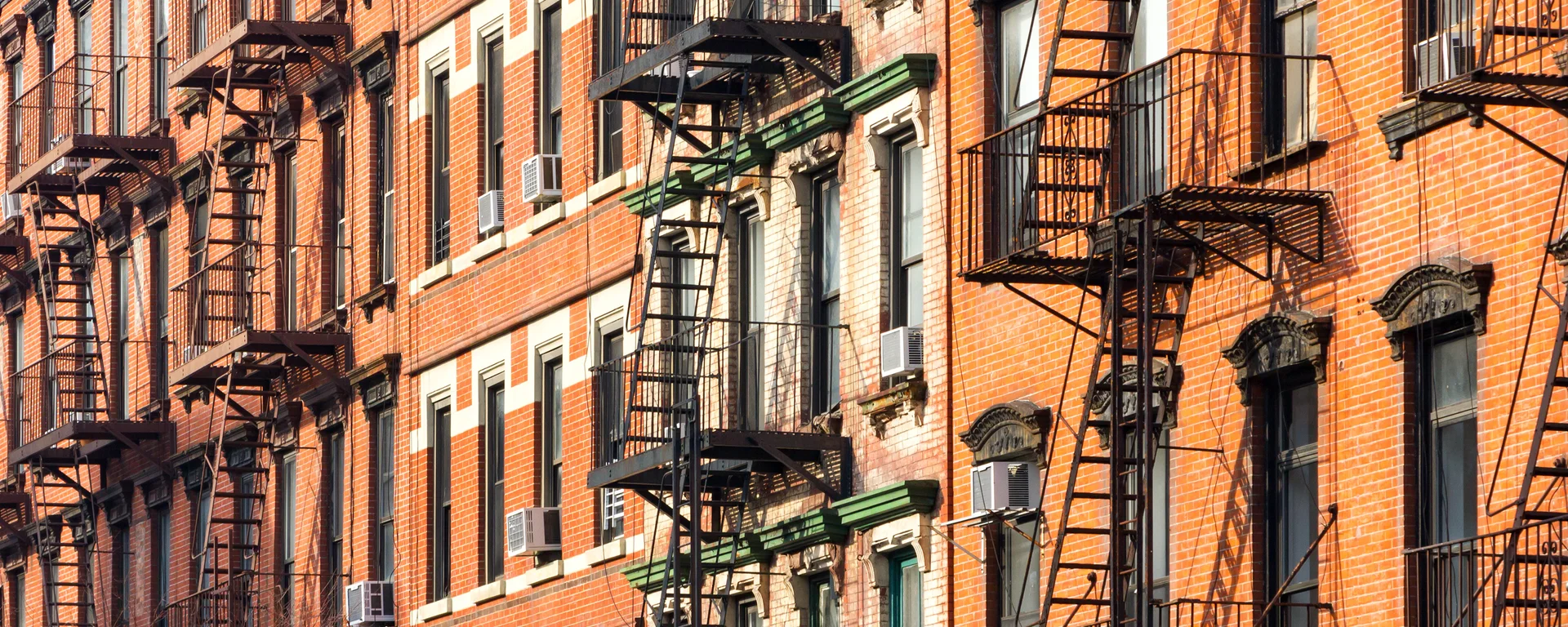
Bronx property tax, borough code 2: the class rates are citywide but the values are not, plus Bronx County lookups, deadlines, exemptions and appeals.
Updated October 2026. Finance has published nothing newer than the tax year 2026 rates, and its Class 2 guide says a year’s rate is not finalized until November, so a Bronx bill is quoted against the tax year 2026 rates as of September 2026. On the Fiscal Year 2027 tentative roll of January 15, 2026, Bronx commercial property posted the largest market value rise of any borough, 8.4 percent. The exemption deadline for the non-primary residence surcharge was October 13, 2026 , and it has passed.
A Bronx property tax bill is built exactly like a bill in any other borough. There is no Bronx rate, no Bronx County assessor and no Bronx formula. Finance sets market value, converts it to assessed value at a fixed ratio, caps or phases in the change, subtracts exemptions, and applies the citywide class rate, as our guide to how NYC property tax works sets out in full.
Bronx County is borough code 2, so every Bronx borough-block-lot number starts with a 2, and that number is the key to every city record. The borough holds 101,626 tax lots on the Fiscal Year 2027 tentative roll, about one in eleven of the city’s 1,114,669.
MGNY helps Bronx owners with assessment reviews, appeals and property-tax filings. Our Tax Commission appeal service sets out the work involved. Request a review of your Bronx property notice to discuss the valuation issue and supporting records.
Is there a separate Bronx property tax rate?
No. The rate follows tax class, and the City Council and the mayor set one rate a year per class citywide, so a two-family house on Bronxdale Avenue and one in Bayside are charged the same class 1 rate. The borough difference sits in the market value, the class mix and the neighborhood the sales model draws from.
| Class | Properties in it | Assessment ratio | Rate, tax year 2026 | Bronx lots, FY2027 tentative roll |
|---|---|---|---|---|
| Class 1 | Residential up to three units, most condos under four stories | 6% | 19.843% | 67,880 |
| Class 2 | Other residential. 2a, 4- to 6-unit rentals; 2b, 7 to 10; 2c, small co-ops and condos; class 2, 11 units and up | 45% | 12.439% | 24,693 |
| Class 3 | Most utility property | 45% | 11.108% | 35 |
| Class 4 | Commercial and industrial: offices, retail, factories, hotels | 45% | 10.848% | 9,018 |
How does Finance decide what a Bronx property is worth?
The method changes with the class, and that is where boroughs diverge. A one-, two- or three-unit Bronx home is valued by statistical modeling of similar properties sold nearby over the prior three years, so a City Island cottage and a Riverdale colonial are priced off different comparable sets.
Class 2 is different by statute. State law makes Finance value all class 2 property as income-producing, and value co-ops and condos as if they were rentals even though they are not. That bites hard here. In the Finance assessment file on Open Data, of 26,932 Bronx class 2 records, 21,835 are straight class 2 buildings of 11 units or more, 3,280 are 2a and 1,673 are 2b, and only 144 are 2c. Set condominium unit and billing lots aside in the Open Data file and the Bronx still holds 22,972 class 2 building lots against 18,367 in Queens, a borough with 373,490 lots on the tentative roll to the Bronx’s 101,626.
Class 4 runs on income earning potential and expenses, so on a commercial building the owner’s own filing drives the assessment directly, while class 2 is modelled off typical income and expenses for similar buildings. Income-producing property assessed above $40,000 must file a Real Property Income and Expense statement or a claim of exclusion, filers at $750,000 or more add a rent roll, and RPIE-2025 was due June 1, 2026. In a borough of walk-ups and storefronts it is the most consequential paper an owner files, hence our RPIE filing service.
Caps then limit how much of a swing reaches the bill: 6% a year and 20% over five in class 1, 8% and 30% in sub-classes 2a, 2b and 2c, everything larger phased in at 20% a year. A capped Bronx assessed value can therefore keep climbing while market value falls.
What did the Fiscal Year 2027 tentative roll say about the Bronx?
Finance published the Fiscal Year 2027 tentative roll on January 15, 2026, valuing every property on its condition as of the January 5 taxable status date. Citywide market value reached $1.659 trillion, up 5.4 percent. Three lines in that release single out the Bronx.
| FY2027 tentative roll | The Bronx | Citywide |
|---|---|---|
| Class 4 market value | Up 8.4 percent, largest rise of any borough | Up 4.3 percent, to $349.2 billion |
| Class 4 assessed value | Up 11.0 percent, largest rise of any borough | Up 5.8 percent, to $141.7 billion |
| Construction activity | Highest percent increase of the five boroughs, 1.2 percent | $11.8 billion of new value added |
| Class 2 market value | Not the outlier this cycle. Brooklyn led at 11.8 percent | Up 6.9 percent, to $422.4 billion |
| Tax lots on the roll | 101,626 | 1,114,669 |
Assessed value drives the bill, and Bronx class 4 assessed value rose 11.0 percent against 5.8 percent citywide, a step change the rest of the city did not feel.
How do you look up a Bronx property tax bill or record?
Three city systems hold three different things, all keyed to that borough-block-lot number.
- The Property Information Portal holds the assessment record for any Bronx lot, including next year’s tentative value.
- Finance’s Property Tax Public Access portal searches by address or borough-block-lot and carries bills, notices, tax class, market value and exemptions.
- ACRIS covers Bronx property records and document images back to 1966, and finds a borough-block-lot number from an address.
For delinquency, a Bronx property becomes lien sale eligible once the debt and its age clear Finance’s thresholds: $5,000 owed for three years on an owner-occupied one- to three-family home, $1,000 for one year on most other property. The page as read on September 4, 2026 still describes the 2025 sale, held June 3, 2025, and sends you to the lien sale archives page for the published lists rather than carrying a current per-borough download. An owner who has lived in the property for the past twelve months, owns no other New York City property and has combined owner income no greater than $110,750 can ask for a waiver of the 5% lien surcharge.
Which dates does a Bronx property owner have to hit?
| Date | Event |
|---|---|
| January 5 | Taxable status date. Property is valued on its condition that day. |
| Mid-January | Tentative roll published, January 15 in 2026. The Notice of Property Value follows; it is not a bill. |
| March 1 | Tax Commission deadline, classes 2, 3 and 4. March 2 in 2026. |
| March 15 | Tax Commission deadline for class 1 (March 16 in 2026), the class 1 Request for Review deadline, and the SCHE and DHE date. |
| April 1 | Request for Review deadline, all other classes. |
| May | Assessment roll finalized. |
| June 1 | RPIE-2025 was due June 1, 2026. Finance publishes each year’s RPIE deadline on its RPIE page. |
| July 1 | Fiscal year begins. Bills come off the final roll. |
| July 1, Oct 1, Jan 1, Apr 1 | Quarterly due dates, assessed value of $250,000 or less. |
| July 1 and January 1 | Semi-annual due dates, assessed value above $250,000. |
| October 13, 2026 | Deadline to claim exemption from the non-primary residence surcharge, now passed. |
Quarterly payers have a grace period to the 15th, and paying early earns a discount of 0.50%, 0.33% or 0.17%.
How does a Bronx owner appeal an assessment?
Two agencies, two filings, not interchangeable. Finance corrects a wrong description, unit count or square footage on a Request for Review or a Request to Update, and says in terms that neither substitutes for appealing the assessed value. Our Notice of Property Value guide decodes the notice that starts the clock.
The appeal goes to the New York City Tax Commission, the city’s independent forum for review of assessments set by Finance. It can cut the assessment, change the tax class and adjust exemptions. An Application for Correction must arrive by March 1 for classes 2, 3 and 4 or March 15 for class 1, and this round it must be filed in person or by mail, not by email. If a property has an effective market value, the case turns on proving it is worth less than that figure. Past the Tax Commission the path runs to court, the proceeding our guide to tax certiorari explains; the whole sequence sits in our guide to the NYC property tax appeal process.
The Bronx numbers show how narrow the funnel is. In the 2025 round the Tax Commission took 6,772 Bronx applications covering 20,638 tax lots and $11,757,144,752 of assessments, offered reductions on 609 of them worth $131,460,700, and saw owners accept 480 worth $101,797,273. About 9 percent of Bronx applications drew an offer, so the quality of the filing does most of the work.
In-person business runs through the Bronx Business Center, 3030 Third Avenue, 2nd Floor, Bronx, NY 10455, at 156th Street, open 8:30 a.m. to 4:30 p.m. Monday to Friday. Book an appointment first; the centers collect payments, hold parking ticket hearings, and receive deeds and mortgages for recording. MGNY files at both agencies: see Tax Commission appeals and Finance Department appeals.
Which exemptions and abatements matter most in the Bronx?
An exemption cuts assessed value before the tax is calculated. An abatement cuts the tax after.
- STAR. New York State runs it now, and Finance no longer administers STAR or E-STAR or accepts applications.
- SCHE and DHE. The senior exemption needs all owners to be 65 or older unless spouses or siblings, on combined income no higher than $58,399; the disabled homeowners’ exemption uses the same limit. Both renew by March 15, and an owner qualifying for both receives SCHE.
- The co-op and condo abatement. Unit owners cannot apply; the board or its authorized agent applies for the whole development, and the benefit runs from 28.1% of the tax at an average assessed value of $50,000 or less down to 17.5% above $60,000, on units bought on or before January 5 and held as a primary residence. The Bronx carries 7,535 condominium unit lots in the Finance assessment file on Open Data, so a board that never files leaves money behind.
- 421-a and 485-x. 421-a is an exemption on Finance’s own benefit list, and 485-x is its successor: read what 421-a is and what 485-x is.
- J-51 and ICAP. J-51 covers residential rehabilitation, ICAP commercial and industrial work. See what J-51 is and our overview of NYC tax abatements.
- The non-primary residence surcharge. This one adds to a bill. For tax years 2026-27 and 2027-28 it reaches one- to three-family homes Finance values above $5 million and condominium or cooperative units it values at $1 million or more. On the FY2027 tentative roll 131 Bronx class 1 lots carry a market value of $5 million or more, against 3,389 in Brooklyn. The second leg catches condominium and cooperative units at $1 million or more, and 1,018 Bronx condominium unit lots clear that line on the same roll. Finance works from the supplemental market value roll it published on July 24, 2026, not from the tentative roll, and the deadline to claim the exemption was October 13, 2026. On September 29, 2026 a court ordered the mailed surcharge notices cancelled. The City appealed the same day and says the ruling is on hold, and the Department of Finance’s page now says the exemption deadline was October 13, 2026 (see the pied-à-terre tax lawsuit page).
Our sibling guides run the same ground for Brooklyn, Queens, Manhattan and Staten Island.
What does it cost to ask MGNY?
Nothing. A real person answers at (212) 343-1111, right away, and the consultation is free. You engage us only if you want the work handled for you. MGNY has worked NYC property tax since 2008, with nearly $300M in tax savings secured for owners, 900+ developments with tax abatements secured and $30B+ represented in appeals.
Bronx assessment up more than the building? The filing window is short and it does not move.
MGNY handles appeals, RPIE and exemption filings for Bronx owners and across the city. Call (212) 343-1111 and we will read your notice with you.
Bronx property tax questions answered
What is the Bronx property tax rate?
There is no Bronx-only rate. It follows the tax class and is set citywide. For tax year 2026, the newest Finance publishes, class 1 is 19.843%, class 2 12.439%, class 3 11.108% and class 4 10.848%.
How do I find Bronx County property tax records?
Start from the borough-block-lot number, which begins with 2 in the Bronx. The Property Information Portal holds the assessment record, Property Tax Public Access the bills, and ACRIS the deeds back to 1966.
When are Bronx property taxes due?
The fiscal year starts July 1. A property assessed at $250,000 or less is billed quarterly, due July 1, October 1, January 1 and April 1, with a grace period to the 15th. Above $250,000 the bill comes twice a year, on July 1 and January 1.
How do I appeal a Bronx property assessment?
File an Application for Correction with the New York City Tax Commission by March 1 for classes 2, 3 and 4, or March 15 for class 1. A Request for Review with Finance fixes wrong property facts, but is no substitute for it.
Where can I find a Bronx delinquent property tax list?
Finance no longer carries a current per-borough eligibility download on its lien sales page. As read on September 4, 2026 the page describes the 2025 sale, held June 3, 2025, and sends you to the lien sale archives page for the published lists, status reports and trust documents.
Sources: NYC Department of Finance pages on tax rates, market and assessed value, assessment definitions, the Notice of Property Value, bills, due dates, RPIE, tax benefits, challenging your assessment, lien sales, ACRIS, the non-primary residence surcharge and the Bronx Business Center, read September 4, 2026; the Finance press release of January 15, 2026 on the FY2027 tentative roll; the NYC Tax Commission site and its 2025 Annual Report, table A6; and NYC Open Data dataset 8y4t-faws. MGNY Consulting is a private consulting firm and is not affiliated with the NYC Department of Finance or the NYC Tax Commission.
See more MGNY updates on Google. Deadlines move: this year’s surcharge exemption deadline was extended to October 6 and then to October 13, 2026. Tap the button and Google adds MGNY Consulting to your preferred sources, so our coverage is more likely to appear in Top Stories. No signup and no email, and one tap undoes it.