What Is LIHTC? The Low-Income Housing Tax Credit, and What Compliance Means for a New York Building
Michael Geylik
September 2, 2026
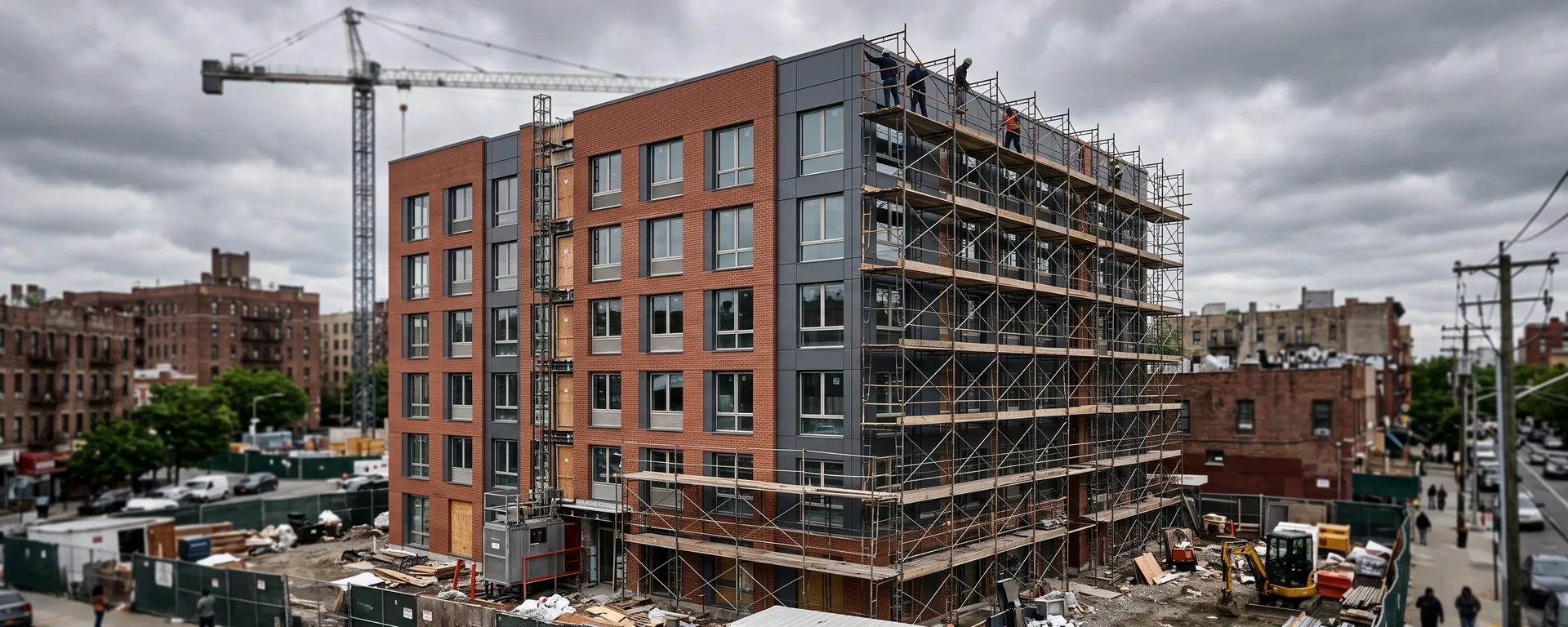
LIHTC explained: Section 42 credits, the 9% and 4% programs, 2026 income and rent limits, set-aside elections, and what a New York owner owes.
Updated September 2026. The numbers under LIHTC moved this year. HUD’s FY 2026 Multifamily Tax Subsidy Project income limits, the ones Section 42 buildings are measured against, took effect May 1, 2026, and HPD puts the 2026 Area Median Income for New York City at $152,700 for a three-person family. Section 42(h)(3)(I) also multiplies each state’s credit ceiling by 1.12 for calendar years after December 31, 2025. For a building in service, the recurring part is LIHTC compliance.
LIHTC is not a housing program in the ordinary sense. No tenant applies to it, and no agency runs it as a landlord. It is a tax provision that pays private investors to finance apartments which then stay affordable for decades. A tenant meets it as an income limit on a lottery application. An owner meets it as a file review, an annual certification, and a covenant that outlives the credits.
What is LIHTC?
LIHTC stands for the Low-Income Housing Tax Credit, at Section 42 of the Internal Revenue Code, created by the Tax Reform Act of 1986. HUD calls it “the most important resource for creating affordable housing in the United States today,” and counts 55,345 projects and 3.9 million units placed in service between 1987 and 2024.
The credit equals an applicable percentage of the qualified basis of each qualified low-income building, claimed over a credit period of 10 taxable years starting with the year the building is placed in service or, by election, the next one. The agency issues a Form 8609 per building; the owner figures the credit on Form 8586 as part of the general business credit. Nobody receives cash: developers sell the credits to investors, and that equity lowers rents.
What are the 9% and 4% credits, and who allocates them in New York?
The statute never calls them the 9 percent and 4 percent credits. Section 42(b) speaks of a “70 percent present value credit for certain new buildings” and a “30 percent present value credit for certain other buildings.” Congress later added floors: not less than 9 percent for new buildings that are not federally subsidized, and not less than 4 percent for other buildings placed in service after December 31, 2020.
The real difference is scarcity. The 9% credit is rationed from a state ceiling built on the greater of $1.75 per resident or $2,000,000, inflation-adjusted since 2002 and multiplied by 1.12 for years after December 31, 2025. The 4% credit sits outside that ceiling when tax-exempt bonds under the volume cap finance 50 percent or more of the aggregate basis of the building and its land, and for bond issues dated after December 31, 2025 an alternative threshold of 25 percent applies, if one obligation funds at least 5 percent of basis.
| Credit | Statutory name | Rate floor | Route to the credit | New York agency |
|---|---|---|---|---|
| 9% | 70 percent present value credit | Not less than 9 percent | Competitive, from the state ceiling | DHCR, once a year |
| 4% | 30 percent present value credit | Not less than 4 percent | Tax-exempt bond financed, outside the ceiling | HFA, with its bonds or another issuer’s |
New York City is its own case. Since 1988 HPD has allocated credits directly to city projects by agreement with New York State Homes and Community Renewal, which designates HPD a Local Housing Credit Agency, renewed annually. Through 2022 HPD had awarded nearly $1.25 billion in annual credit allocations, $12.5 billion over their ten-year lives, creating or rehabilitating nearly 112,900 low-income units. Allocations follow a qualified allocation plan that must prefer the lowest income tenants and the longest commitments.
What are the LIHTC income limits, and what rent can be charged?
Income limits are percentages of area median gross income. HUD publishes the operative figures as Multifamily Tax Subsidy Project limits, which it says “set maximum rental rates for projects funded with tax credits authorized under section 42.” The FY 2026 set took effect May 1, 2026.
Rent follows the limit, not the tenant. A unit is rent-restricted when gross rent does not exceed 30 percent of the imputed income limitation for that unit, and Section 8 payments are excluded from gross rent. HPD’s 2026 chart gives the scale:
| Household size | 50% AMI | 60% AMI | 80% AMI |
|---|---|---|---|
| 1 person | $59,400 | $71,280 | $95,000 |
| 3 people | $76,350 | $91,620 | $122,150 |
Those are HPD’s LIHTC figures, effective May 1, 2026. A tax credit building’s own limits come from HUD’s table for its area, close to the City chart but not identical, a common source of a wrong rent roll. Tenants meet these numbers first as an advertisement, which is why the NYC housing lottery and the tax credit rules describe one apartment.
What is the minimum set-aside, and what does income averaging change?
A project elects one of three tests, irrevocably, and the election fixes how many units go to income-qualified households.
| Election | Share of units | Income limit |
|---|---|---|
| 20-50 test | 20 percent or more | 50 percent or less of area median gross income |
| 40-60 test | 40 percent or more | 60 percent or less of area median gross income |
| Average income test | 40 percent or more (25 percent under section 142(d)(6)) | Designated unit by unit at 20, 30, 40, 50, 60, 70 or 80 percent, averaging no more than 60 percent |
Averaging is why a tax credit building can hold a unit designated at 80 percent of AMGI: deeper units at 20 or 30 percent buy room at the top, as long as the designations average no more than 60 percent. DHCR says as much for its 9% program, that “Projects electing the Average Income set-aside may include LIHTC-financed units affordable to households earning up to 80% AMI.” The 25 percent variant is a New York City rule; the compliance regulation names the city: “the 25-60 test under sections 42 (g)(4) and 142 (d)(6) for New York City.”
How long does a LIHTC building stay restricted?
Longer than most owners plan. The compliance period is 15 taxable years beginning with the first year of the credit period, and that is only the recapture window. No credit is allowed unless an extended low-income housing commitment is in effect, and the extended use period runs to the later of the agency’s specified date or 15 years after the compliance period closes. Thirty years is the floor, with two statutory exits: foreclosure, and an owner’s request after year 14 that the agency cannot answer with a qualified contract within a year.
The commitment is recorded under state law as a restrictive covenant. It binds every successor owner, lets any income-qualified individual enforce it in state court, and prohibits refusing to lease to a Section 8 voucher holder. HPD requires it recorded before Form 8609 or a carryover allocation issues, plus a lease rider disclosing the restricted rent on each low-income unit, and prefers projects that let the City extend affordability past 30 years.
What does LIHTC compliance require every year?
The owner certifies, at least annually, to the allocating agency and for the preceding 12 months: that the minimum set-aside was met, that the applicable fraction of each building held or exactly how it changed, and that each low-income tenant was income certified with supporting documentation. In New York City those Annual Owner Certifications are due by March 1, and HPD adds a review of the tenant files behind them and a physical inspection of the property.
The agency’s schedule is fixed by regulation. It must inspect and review low-income certifications by the end of the second calendar year after the last building is placed in service, then at least once every 3 years, on a random minimum sample: 22 units in a project with 102 to 130 low-income units. Noncompliance reaches the IRS on Form 8823, no later than 45 days after the correction period ends, corrected or not. In a 100 percent LIHTC project, tenant recertification can stop once every unit is certified under section 142(d)(3)(A); the owner certification does not.
This is the work MGNY does: tax credit requirements from file review to certification, with software and management that make HDC, HPD and IRS compliance manageable. As an HPD-approved Marketing Monitor we handle the leasing side too, re-marketing vacant affordable units, getting applicants approved by HPD before a lease is signed, and filing quarterly rent rolls.
What does it cost to ask MGNY?
Nothing. A real person answers at (212) 343-1111, right away, and the consultation is free. You engage us only if you want the compliance handled for you. MGNY has worked NYC property tax since 2008, with $50M+ in tax refunds secured for owners, 900+ developments with tax abatements secured and $30B+ represented in appeals.
A certification due, an audit letter, or a deal about to close?
See what LIHTC compliance covers, or call (212) 343-1111 and we will go through the file with you.
Sources, all read September 2026: 26 U.S.C. Section 42 on the Cornell Legal Information Institute; 26 CFR 1.42-5; the IRS pages for Forms 8609 and 8586; HUD USER’s LIHTC data, property database and MTSP income limits pages; New York State Homes and Community Renewal’s 9% and 4% LIHTC program pages; and NYC HPD’s Tax Credit and HOME Compliance page, Area Median Income page and 2026 Qualified Allocation Plan, dated February 23, 2026. MGNY Consulting is a private consulting firm and is not affiliated with the Internal Revenue Service, New York State Homes and Community Renewal or the NYC Department of Housing Preservation and Development.
Get our updates first on Google. The numbers move: this year’s LIHTC income limits changed on May 1, and the state credit ceiling changed with the new calendar year. Tap the button and Google adds MGNY Consulting to your preferred sources, so our coverage surfaces first in your results. No signup and no email, and one tap undoes it.