What Is HPD? NYC’s Housing Agency: HPD Online, Violations, Registration and Housing Connect
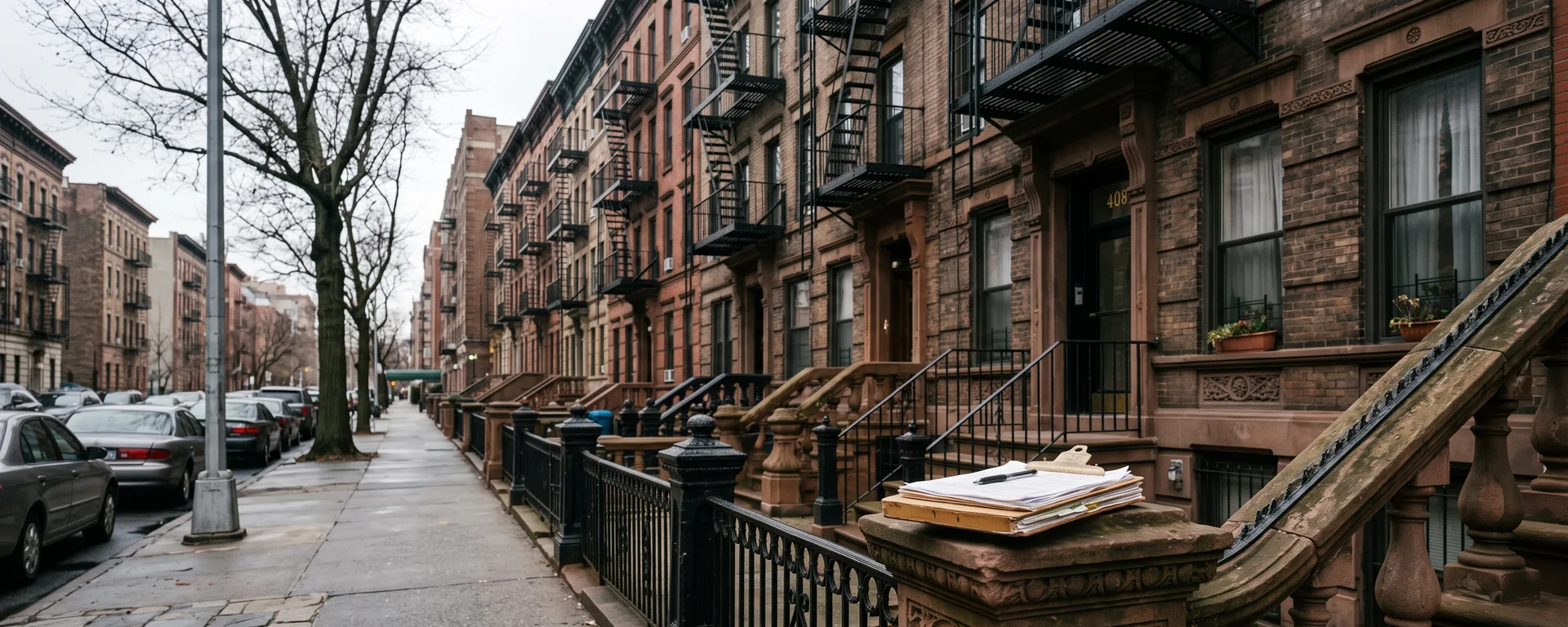
HPD is New York City's Department of Housing Preservation and Development: HPD Online building lookups, violation classes, and the September 1 registration.
Updated September 2026. HPD NYC property registration is due September 1 every year, with the window opening May 21, though HPD set the 2026-2027 deadline at Monday, August 31 on its own homepage, so check the banner before you rely on the rule date. An unregistered building cannot certify a violation as corrected, request a dismissal, or bring a nonpayment case in Housing Court. Since Local Law 71 of 2023, failing to file carries $500 to $1,500 for a multiple dwelling of five units or fewer and $1,000 to $5,000 above that.
HPD is the New York City Department of Housing Preservation and Development, the city agency that inspects apartments, issues housing code violations, takes the annual property registration, runs the affordable housing lotteries on NYC Housing Connect and administers Section 8 vouchers. In New York the letters mean a notice in the mail, a violation on a building record, or an apartment lottery.
For owners of income-restricted apartments, MGNY provides marketing monitoring for vacancies, applicant review and program reporting. Discuss your building with its governing documents and upcoming dates. Your building’s program and agreements determine the scope of the work.
What is HPD NYC, and what does the agency do?
HPD NYC, the Department of Housing Preservation and Development, is a city agency whose stated mission is “to promote quality and affordability in the city’s housing, and diversity and strength in the city’s neighborhoods.” HPD states three goals, safety and health, housing affordability and neighborhood strength; in practice the work splits into four jobs. Code enforcement is the loud one: HPD enforces “the New York City Housing Maintenance Code on behalf of tenants,” inspecting homes, bringing Housing Court cases and requiring emergency repairs. Development and preservation is the money one, marketing is the lottery one, rental assistance is the voucher one. Annual registration threads through all four: it is the address HPD mails everything to.
What does HPD do that DHCR and the Department of Buildings do not?
Three agencies write to the same building, and HPD NYC is only one of them. HPD is the city, enforcing the Housing Maintenance Code and the State Multiple Dwelling Law. The Department of Buildings is separate, with its own violations and vacate orders. Rent regulation belongs to New York State Homes and Community Renewal, parent of DHCR. The costly overlap is registration: HPD warns that “registering your property with HPD is not the same as registering your building and its apartments” with the state. A rent-stabilized building owes both, and the state one is due July 31 at “five hundred dollars per unregistered unit for each month registrations are delinquent.”
What is HPD Online, and how do you look up a building?
HPD Online is the HPD NYC public building lookup, at hpdonline.nyc.gov/hpdonline. Enter an address and the record comes back with what HPD says it “may include”: “Complaints and Violations,” “Property Registration,” “Charges and Litigation,” “Block and Lot Information” and “Vacate Orders.” Owners, tenants, lenders and buyers read the same page, which is why an uncleared class C surfaces at the worst moment.
Orders are not violations: they “appear on the violation list with a hazardous class of ‘I’.” The Charges tab is where emergency repair money shows up, and a 311 complaint is tracked here by its Service Request number.
What are HPD violations, and what do classes A, B and C mean?
An HPD NYC violation is a written finding, after an inspection, that a condition breaks the Housing Maintenance Code. Inspections follow a 311 complaint when a tenant reports a condition and the landlord does not fix it, and the owner is not told when the inspector is coming. Every violation carries a class, “A (non-hazardous), B (hazardous) or C (immediately hazardous),” and the class sets the clock. HPD’s own table heads that column “Time owner has to correct from notice before civil penalties apply if sought in Housing Court.”
| Violation class | Hazard type | Time to correct from service |
|---|---|---|
| Class A | Non-hazardous | 90 days |
| Class B | Hazardous | 30 days |
| Class C: lead paint, window guards, mold, mice, cockroaches, rats | Immediately hazardous | 21 days |
| Class C: self-closing doors | Immediately hazardous | 14 days |
| Class C: heat and hot water | Immediately hazardous | No time, per HPD |
| All other Class C | Immediately hazardous | 24 hours |
Behind the heat and hot water row is the heat calendar: hot water at 120 degrees Fahrenheit “365 days per year,” and, from October 1 through May 31, at least 68 degrees indoors between 6:00am and 10:00pm whenever it is below 55 outside, plus at least 62 degrees indoors between 10:00pm and 6:00am no matter what the outside temperature is.
How does an owner clear an HPD violation?
By correcting the condition and certifying it on time. Certification of Correction is “a free process,” filed on paper or through eCertification, which requires a current Property Registration and cannot be used for lead-based paint, mold or pest violations. Except for lead-based paint violations, a certified violation is “deemed complied and closed 70 days from the date of the receipt of the certification” unless HPD re-inspects first. Tenants can challenge a certification, and one found uncorrected on audit goes into False Certification status and stays open, with penalties of their own.
Miss the certification date and the free route closes. The remaining route is a Dismissal Request, a re-inspection that “requires the submission of an application by a property owner and has an associated fee,” during which “new violations may be issued.” Since July 1, 2026 those go to HPD’s Code Enforcement Central Violations Administration Unit at 345 Adams Street, 10th Floor, Brooklyn. Worse than the fee is the Emergency Repair Program, where HPD hires the contractor and bills the owner through Finance; an unpaid charge “constitutes a tax lien against the property.”
| Violation class | Civil penalty, issued on or after December 8, 2023 |
|---|---|
| Class A | $50 to $150, plus $25 daily |
| Class B | $75 to $500, plus $25 to $125 daily |
| Class C, 5 units or fewer, other than the rows below | $150 to $750, plus $50 to $150 daily |
| Class C, more than 5 units, other than the rows below | $150 to $1,200, plus $150 to $1,200 daily |
| Class C, self-closing doors | $250 to $500, plus $250 daily until corrected, unchanged |
| Class C, heat and hot water | $350 to $1,250 daily, and $500 to $1,500 daily for subsequent violations |
| Class C, lead paint hazard | $250 daily, up to $10,000, unchanged |
Which buildings must register with HPD NYC, and when is it due?
Owners must register annually if the property “is a multiple dwelling (3+ residential units) or a private dwelling (1-2 residential units) where neither the owner nor the owner’s immediate family resides.” Hotels count, and so do condominiums and cooperatives, where the board registers rather than the unit owner. The deadline is September 1, the window opens May 21, and a fresh filing is owed whenever ownership or the managing agent changes.
A valid registration has two halves, and filing only one leaves the building unregistered. HPD requires “both: 1) payment of $13 each year to the Department of Finance and 2) submission of a properly completed Property Registration Form to HPD.” The $13 arrives on the Finance Statement of Account “annually due on July 1st,” so fee and form run on different calendars. The form is prepared in HPD’s online system, PROS, then printed, signed and mailed to Department of Housing Preservation and Development, Church Street Station, PO Box 3888, New York, NY 10008-3888. One rule trips up out-of-town owners: the managing agent must be a natural person over 21 who lives or keeps an office in the city.
What happens if a building is not registered?
Local Law 71 of 2023 amended Administrative Code section 27-2107 effective December 8, 2023, so an owner who fails to file faces “a civil penalty between $500 to $1,500 for a multiple dwelling with five units or less and between $1,000 to $5,000 for multiple dwellings with more than five units,” plus “between $750 and $5,000” for a false filing. The operational penalty hurts more. Unregistered buildings “may be issued Orders, and will be ineligible to certify violations, request a Code Violation Dismissal, or initiate a court action to recover possession of the premises for nonpayment of rent.” An Order to register clears once you file.
Does HPD run the affordable housing lotteries?
Yes, through NYC Housing Connect, “New Yorkers’ portal to find and apply for affordable rental and homeownership opportunities across the five boroughs,” which lists re-rentals as well as new lotteries. Housing Ambassadors give free help in “more than 20 languages,” and the lottery line takes voicemail at 212-863-7990, where HPD says it is “temporarily unable to answer calls in real time” and calls back. Our deep guide is NYC Housing Connect; the mechanics from log order to lease-up sit in how the NYC housing lottery works, and the programs behind the units in mandatory inclusionary housing and LIHTC.
What is HPD Section 8, and who can apply?
HPD NYC runs one of three Section 8 programs in the city; the Housing Authority and New York State Homes and Community Renewal run the other two. Housing Choice Vouchers are “80 percent of the rental assistance administered by HPD,” which “serves over 39,000 households in all five boroughs” with “over 9,000 landlords” participating. Tenants pay “typically around 30 percent of monthly household income” and HPD pays the balance. Applying is the surprise: vouchers go to households in buildings HPD financed and to homeless individuals referred by city agencies, and “applications are not accepted by the general public.”
How do you reach HPD NYC?
For a repair, heat or safety problem the route to HPD NYC is 311, by phone, at TTY (212) 504-4115, or through 311ONLINE, and HPD asks tenants to try the landlord first. Otherwise the main number is 212-863-6300 and the mailbox is [email protected]. Registration is 212-863-7000, Section 8 is 917-286-4300, the lottery helpline is 212-863-7990, and the Housing Litigation Division is 212-863-8200. Headquarters is 100 Gold Street, New York, NY 10038. Code enforcement goes to the borough office.
| Borough | Code Enforcement office | Phone |
|---|---|---|
| Bronx | 1932 Arthur Avenue, 3rd Floor, Bronx, NY 10457 | 212-863-7050 |
| Brooklyn | 701 Euclid Avenue 11208, and 345 Adams Street 11201 | 212-863-6620, 212-863-8060 |
| Manhattan | 94 Old Broadway, 7th Floor, New York, NY 10027 | 212-863-5030 |
| Queens | 120-55 Queens Boulevard, Kew Gardens, NY 11424 | 212-863-5990 |
| Staten Island | 10 Richmond Terrace, Staten Island, NY 10301 | 212-863-8100 |
Where does MGNY come in on the owner side?
On the housing side of the firm, HPD NYC is the counterparty on nearly everything we file. As an approved HPD marketing agent we take on the leasing of a building’s income-restricted apartments and see every qualified applicant through to move-in, with HPD lottery management as the machinery behind it. As an HPD-approved marketing monitor we keep a building compliant after lease-up: re-marketing vacant units, checking income and occupancy, getting applicants approved before a lease is signed, and filing quarterly rent rolls to HPD. Because a stabilized building owes the state too, DHCR registration and compliance covers that July 31 filing.
Frequently asked questions about HPD
What does HPD stand for?
In New York City, the Department of Housing Preservation and Development: code enforcement, affordable housing development, property registration, Section 8 and NYC Housing Connect.
How do you look up HPD NYC violations for a building?
Go to HPD Online, the HPD NYC building lookup at hpdonline.nyc.gov/hpdonline, and enter the property address. The record shows complaints, violations, registration, charges, litigation and vacate orders.
When is the HPD NYC property registration deadline?
September 1 every year for HPD NYC registration, with the window opening May 21. It is valid only when both the $13 Department of Finance payment and the completed form are in.
What is the HPD phone number?
The main number is 212-863-6300. Repairs and heat complaints go through 311 instead. Registration is 212-863-7000, Section 8 is 917-286-4300, and the lottery helpline is 212-863-7990.
What is a class C HPD violation?
Class C means immediately hazardous. Most must be corrected within 24 hours of service, with 21 days for lead paint, window guards, mold and pests, 14 days for self-closing doors, and no grace for heat and hot water.
Does HPD run NYC Housing Connect?
Yes. Housing Connect is HPD’s portal for finding and applying to affordable rentals and homeownership across the five boroughs, and it carries re-rentals alongside new lotteries.
What does it cost to ask MGNY?
Nothing. A real person answers at (212) 343-1111, right away, and the consultation is free. You engage us only if you want the work handled for you. MGNY has worked NYC property tax since 2008, with nearly $300M in tax savings secured for owners, 900+ developments with tax abatements secured and $30B+ represented in appeals.
A building heading into HPD marketing, or a registration that lapsed?
MGNY runs HPD lotteries, marketing and compliance monitoring for New York City owners and developers. Call (212) 343-1111 and we will read your building’s HPD record with you.
Sources: New York City Department of Housing Preservation and Development, HPD website, nyc.gov/site/hpd, read September 4, 2026: About HPD, HPD Online, Register Your Property, Clear Violations, Penalties and Fees, eCertification, Emergency Repair Program, Heat and Hot Water, Orders, Report a Quality or Safety Issue, NYC Housing Connect, About Section 8, Section 8 Eligibility, Contact HPD and Borough Service Centers. The violation classes and correction periods are HPD’s own table. MGNY Consulting is a private consulting firm and is not affiliated with the New York City Department of Housing Preservation and Development.
See our updates more often on Google. The rules move: HPD violation penalties were rewritten by Local Law 71 in December 2023. Tap the button and Google adds MGNY Consulting to your preferred sources. No signup and no email, and one tap undoes it.